What to know about a Florida slip and fall claim
A slip and fall case is one type of premises liability claim. In plain terms, that means the focus is on whether a property owner or business used reasonable care to keep the property safe for visitors. In Florida, these claims often turn on what the owner knew, what should have been discovered, and how the condition was handled after the fall.
For people hurt in Jacksonville and Northeast Florida, the first question is often not whether the injury was serious. It is whether the facts support a claim. That is where notice, the condition itself, and the surrounding evidence matter most.
In many cases, the details matter more than the fall itself. The law looks at the condition, the timing, and whether the property owner had a fair chance to respond.
Our slip and fall practice area page explains how we approach these claims for injured clients in Jacksonville.
How Florida property claims are evaluated
A premises liability claim is usually evaluated piece by piece. The central questions often include:
- Was there a dangerous condition on the property?
- Did the owner or business know about it, or should they have known?
- Did the owner have a reasonable chance to fix it or warn about it?
- Did the dangerous condition cause the fall and the injuries?
- Was the injured person partly at fault?
The evidence often matters more than the labels. Photos of the scene, video footage, incident reports, witness statements, and medical records can all help show what happened. In a business setting, maintenance logs, cleaning schedules, inspection routines, and employee statements may become important as well.
A claim may be stronger when there is proof that a hazard existed for a meaningful period of time, or that the same problem kept happening. Repeated leaks, ongoing floor maintenance problems, or a known walkway defect can all support a negligence theory when the evidence ties those facts to the fall.
If the fall led to a serious injury, the case may also involve more than the scene itself. The injury’s severity, future treatment, and impact on work can affect damages.
For readers dealing with a more complex injury matter, our personal injury attorney page outlines the broader kinds of cases we handle.
What notice means in a slip and fall case
Notice is often a key issue in a Florida slip and fall claim. Notice means the owner or business either knew about the hazard or should have known.
There are two basic forms:
- Actual notice: someone on the property knew the danger was there.
- Constructive notice: the danger was present long enough, or happened often enough, that the owner reasonably should have discovered it.
This is why timing matters. If a spill happened seconds before a fall and no one had a fair chance to see it, the defense may argue there was no notice. If the spill had been there for a while, or if employees walked past it without taking action, the claim may look stronger.
Constructive notice can be shown through facts rather than direct admission. That might include dirty edges around a spill, track marks through the hazard, repeated complaints, or surveillance video showing the condition was present for a period of time.
Notice also matters because it helps answer whether the business had a chance to prevent the injury. If the property owner had no reasonable chance to fix the condition, liability may be harder to prove. If the owner knew about the hazard and did nothing, the analysis changes.
That is one reason people should document the scene quickly after a fall when they can do so safely. A clear record of the hazard can make the difference between a claim based on facts and a claim built on memory alone.
Common dangerous conditions in Florida falls
Slip and fall claims can arise from many different hazards. Some of the most common include:
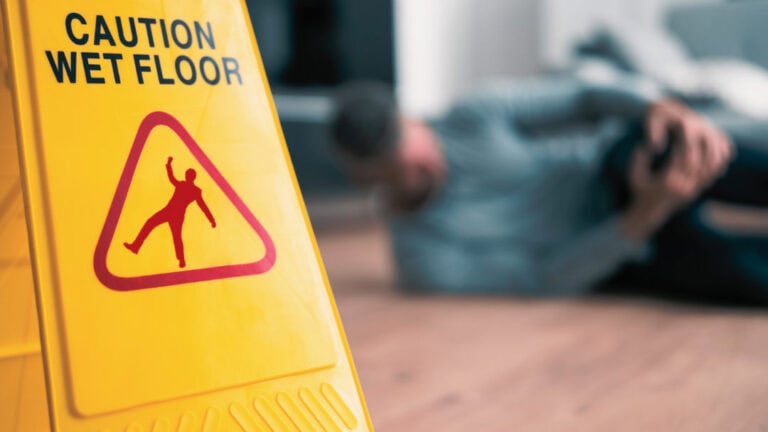
- Wet floors
- Spills that were not cleaned up
- Recently mopped surfaces without warning signs
- Uneven flooring
- Broken or missing handrails
- Poor lighting
- Torn carpeting or loose mats
- Debris in walkways
- Slippery entrances during rain
- Damaged stairs or sidewalks
Not every hazard creates liability. The issue is whether the condition was dangerous enough to create an unreasonable risk and whether the owner failed to address it.
A property owner may have a duty to inspect the premises, respond to known hazards, and make repairs within a reasonable time. What counts as reasonable depends on the setting. A busy store, an apartment complex, or a restaurant may have different maintenance expectations than a private residence.
The condition itself also matters. A visible hazard may still support a claim if it was difficult to avoid, poorly marked, or created by the owner’s own conduct. On the other hand, if the condition was minor and obvious, the defense may argue that the owner did not breach a duty or that the injured person should have avoided it.
How comparative fault can affect a case
Florida’s comparative fault rule can affect the amount recovered in a premises liability case. In practical terms, the defense may try to argue that the injured person was distracted, moved carelessly, ignored warnings, or failed to notice an obvious hazard.
That does not automatically defeat a claim. It means the case may become a question of percentages. A jury or other factfinder may decide how much responsibility belongs to each side, and any recovery may be reduced accordingly.
This is why the facts around the fall matter so much. Lighting, signage, footwear, the layout of the area, and what the person could reasonably see can all matter. If the hazard was not obvious, or if the property owner created the risk and failed to fix it, comparative fault may be less persuasive.
What evidence helps most
Strong premises liability claims are built on evidence gathered early. Useful evidence often includes:
- Photos and video of the scene
- Names of witnesses
- Incident or accident reports
- Clothing and shoes worn during the fall
- Medical records and billing records
- Store surveillance footage, if available
- Maintenance or inspection records
- Notes about weather or spill conditions
- A timeline of what happened before and after the fall
In a serious injury case, it also helps to document how the injury affects daily life. Missed work, limited mobility, physical therapy, and ongoing pain can all matter in evaluating damages.
If the incident happened at a business, it may be important to act quickly while the scene is still intact and the records are still available. That does not mean every case needs a dramatic response. It does mean preservation matters.
For clients who want direct guidance from an attorney, our firm’s attorney page for Wayne Hogan is one place to learn more about the lawyers behind the firm.
Common mistakes to avoid
People often weaken a slip and fall claim without realizing it. Some of the most common mistakes are:
- Leaving the scene without reporting the fall
- Failing to take photos or video
- Not getting medical care promptly
- Giving a rushed statement before understanding the facts
- Throwing away shoes or clothing worn during the fall
- Posting about the incident on social media
- Assuming the property owner will preserve evidence automatically
Another common mistake is waiting too long to ask for help. The sooner the facts are reviewed, the easier it is to identify the correct property owner, locate witnesses, and preserve key records.
It is also important not to assume every fall is a viable claim. Some cases are strong, some are weak, and many depend on details that are not obvious at first glance. A careful review can help separate a truly dangerous condition from a simple accident.
What property owners should keep in mind
This topic is not only for injured people. Homeowners and small business operators also need to understand how these claims are evaluated.
A property owner should keep walkways reasonably safe, address known hazards, and respond to conditions that could injure visitors. That usually means regular inspection, prompt cleanup, and clear warnings when a hazard cannot be fixed right away.
For business operators, written cleaning logs and inspection routines can help show that the property was being monitored. For homeowners, common-sense maintenance matters too. Loose steps, broken lighting, and slippery entryways can create risk for guests and visitors.
If a claim is made, the owner’s records may become important. Good documentation can help explain what happened and when. Poor documentation can make the defense harder.
When a slip and fall becomes a larger injury case
Some falls result in more than bruises or soreness. A fall can lead to fractures, head injuries, back injuries, shoulder injuries, or long-term mobility problems. When that happens, the claim may move from a simple accident question to a more serious damages evaluation.
That can involve:
- Emergency treatment
- Orthopedic care
- Imaging and diagnostic testing
- Follow-up therapy
- Time away from work
- Future medical needs
- Permanent limitations
In serious cases, the legal review may be more involved because the injuries and future losses matter. That is especially true when treatment is ongoing or the medical picture is still developing.
Frequently asked questions
What is a Florida slip and fall claim?
It is a premises liability claim based on a fall that may have been caused by a dangerous condition on someone else’s property.
Who is this guidance for?
It is meant for homeowners and small business operators in our service area, as well as injured people trying to understand how these claims are reviewed.
How should readers apply this?
Start with the checklist, preserve the evidence you can, and have the facts reviewed before records or memories fade.
A practical checklist after a slip and fall
If a fall happens, a simple checklist can help preserve the facts:
- Get medical attention if needed.
- Report the incident to the property owner, manager, or employee.
- Take photos of the hazard and the surrounding area.
- Get names and contact information for witnesses.
- Keep the shoes and clothing worn during the fall.
- Write down what happened while the details are fresh.
- Save medical records, bills, and work-related documentation.
- Ask an attorney to review the facts before evidence disappears.
The goal is not to overcomplicate a painful event. It is to keep the record accurate while the scene and memories are still fresh.
Speak with a Jacksonville premises liability attorney
If you were hurt in a fall and are not sure whether Florida law supports a claim, we can review the facts and explain your options. At THL Terrel Hogan Law, we help injury victims pursue compensation and we are prepared to negotiate or litigate when needed.
We serve clients in Jacksonville and across Northeast Florida, and we approach these matters with the same steady focus we bring to other serious injury cases.
If you would like to talk through what happened, contact our office and speak directly with an attorney